
«Before placing any wager or looking at headline casino promotions, evaluating the exact game rules, wheel configuration, and legal conditions is the first step toward informed play.» Claire Bennett, Senior Casino Content Editor

Author: Claire Bennett, Senior Casino Content Editor · Reviewed for factual accuracy against published mathematical and regulatory sources · Last revised: February 2026
Online roulette is one of the most accessible table games in the digital casino landscape. Yet its simplicity hides a rigid mathematical framework and a set of regulatory conditions that matter a great deal in Australia. For adult readers researching their options, the practical job is separating marketing claims from verifiable operational facts. Federal rules under the Interactive Gambling Act stop domestic operators from supplying real-money online casino games to residents, and Australians still encounter offshore sites offering every roulette format imaginable. Understanding how these games work, how odds are structured, and where the risk sits is the groundwork you do before any decision.

Key takeaways at a glance
- Pick the wheel, not the bonus. French roulette with La Partage carries a 1.35% house edge on even-money bets, European roulette 2.70%, American roulette 5.26%. Skip the Five-Number Bet at 7.89%.
- Every payout is deliberately short of true odds. A single number wins once in 37 spins but pays only 35:1. That missing unit is the house edge.
- No staking system beats the maths. Martingale, Fibonacci, D'Alembert, Paroli, Labouchere and the James Bond cover reshape variance, never expectation.
- RNG vs live dealer: RNG resolves instantly and offers free demo play; live dealer streams a physical wheel at roughly 30 to 60 seconds per round and is real-money only.
- Australian context: the Interactive Gambling Act targets operators, not players. Offshore play means no ACMA dispute protection. Check PayID, crypto and Neosurf availability, cashout caps and KYC rules before depositing.
- Start in demo. Free-play mode lets you test table limits, chip placement and call bets at zero financial exposure.

What roulette online is and which formats are available
Online roulette is a digital adaptation of the traditional table game where players bet on where a small ball will settle on a spinning, numbered wheel. Across modern casino software, a roulette game appears in three primary formats: free roulette or roulette demo modes, software-driven Random Number Generator (RNG) titles, and real-time roulette live dealer streams. Each one serves a different purpose, depending on whether you want to test the rules, run fast solitary sessions, or sit in on a broadcast table.
For adult players in Australia, the choice comes down to intent, account status and risk tolerance. Free-to-play versions let you play roulette with virtual credits, so there is no financial exposure while you learn the table layout. Playing roulette real money games is a different exercise: you deposit actual funds, and every outcome moves your balance. That distinction sounds obvious. In practice, the interface looks nearly identical, which is exactly why people misjudge it.
Scale matters here too, because roulette is not a niche product in a small market.
«65.1% of Australian adults gambled in the previous year, with lotteries leading at 52.7% participation.» Australian Gambling Research Centre, National Gambling Prevalence Study pilot (2024). https://www.agrc.org.au
Format selection guide for online roulette (alt-text: roulette online format selection workflow)
Option A: learning the rules with zero financial risk
- Status: unverified account, no deposit required
- Path: select roulette demo or free roulette
- Outcome: practice with a virtual balance, test betting configurations, watch how the wheel behaves
Option B: real-money stakes via RNG software
- Status: account registered, identity verified, funds deposited
- Path: select roulette real money in RNG format
- Outcome: automated, fast-paced spins against your actual balance, with certified random number generator results
Option C: real-time interactive stream
- Status: account registered, funds deposited, live studio access active
- Path: select roulette live casino or roulette live dealer
- Outcome: streamed video feed with a human croupier, timed betting windows and physical wheel hardware
Figure 1: Decision framework for choosing an online roulette format based on account verification, risk preference and session goals.

Roulette demo and free roulette for learning the game
A roulette demo is a non-monetary software session that hands you virtual chips so you can test features and the interface without financial risk. In free roulette mode, the underlying logic, wheel behaviour and payout structure stay identical to the standard RNG title. That means you can practise placing awkward inside and outside wagers, including the ones that are easy to misplace on a phone screen.
Think of demo play as a pre-live validation step. Software quality frameworks assess products through functional suitability and usability before deployment, and the same logic applies to a betting interface. A neutral trial environment lets you inspect table limits, learn the pacing, and confirm that the chip-placement and undo buttons behave as they should. ISO/IEC 25010:2023 defines those quality characteristics, though it is a general software standard rather than a gambling-specific one, and no published dataset shows that demo practice improves real-money results. It simply lets you meet the 37 or 38 pockets without paying tuition.
One practical point most guides skip: registration requirements for demo mode vary by operator. Many offshore lobbies load RNG roulette in "fun mode" straight from the game tile with no account at all. Others insist on a registered but unfunded account before demo credits appear, because the session has to be tied to a session ID. Live dealer tables almost never issue demo credits, since the studio, croupier and broadcast are billed per table hour.
Virtual practice credits cannot be converted into real currency, and demo outcomes do not predict commercial sessions, where bankroll pressure and impatience quietly change how you bet.

Roulette real money: playing for money in an online casino
Disclaimer: this information is general in nature and is not a substitute for legal or financial advice. Real-money online casino play is restricted under Australian interactive gambling legislation, and offshore participation carries no domestic consumer protection.
Playing roulette real money titles requires an active player account, verified identity details (KYC) and a funded balance before you can place monetary wagers on the layout. In a roulette casino environment, each chip you select corresponds to a fiat currency value, and any winning outcome credits directly to your real-money wallet.
Bankroll management against fixed table limits becomes the practical skill at this point. Standard tables enforce minimum and maximum thresholds per position, such as a $1 minimum on Straight Up numbers and a $5 minimum on outside bets.
Chips only represent money once a cash table is selected. Until then, the same interface settles in non-cash credits, and a spin will not be accepted if your stake exceeds either the available balance or the table cap.
Product-level risk is measurable, and roulette does not sit at the gentle end of the scale:
«Live roulette shows stronger associations with harm markers, including declined deposits, bonus seeking, within-session top-ups and unusual-hour play, than software versions.» Delfabbro et al., Behavioural markers of harm and their potential in identifying product risk in online gambling (2023 to 2025). https://www.agrc.org.au
Inspecting withdrawal terms, maximum cashout caps and account verification rules before you place a real-money bet keeps your financial expectations tied to how the platform actually operates.
Roulette rules: how to play and place bets
Standard roulette rules require players to place their chips on designated positions of the roulette table before the betting window closes. The wheel is then spun and a ball is released in the opposite direction. The winning outcome is decided by one thing only: the numbered pocket where the ball comes to rest.
Knowing the mechanics of a round prevents expensive misclicks and keeps your wagers aligned with the plan you actually had. Desktop or mobile, every round follows the same standardised sequence.
1
Select the game table. Choose your variant, European or American or French, and read the minimum and maximum betting limits before you sit down.
2
Set the chip denomination. Click the chip value in the interface, for example $0.50, $1, $5 or $25, to calibrate your base unit.
3
Place your bets. Position chips on the grid, either on individual numbers (inside bets) or on broader categories such as Red/Black (outside bets), before the bets are closed indicator appears.
4
Initiate the spin. In RNG mode, press "Spin". In live dealer mode, wait for the croupier to announce "No more bets" as the ball is launched onto the spinning roulette wheel.
5
Confirm the outcome and settlement. Watch where the ball settles. Winning bets are calculated automatically and paid per the fixed schedule, while losing chips are swept from the table.
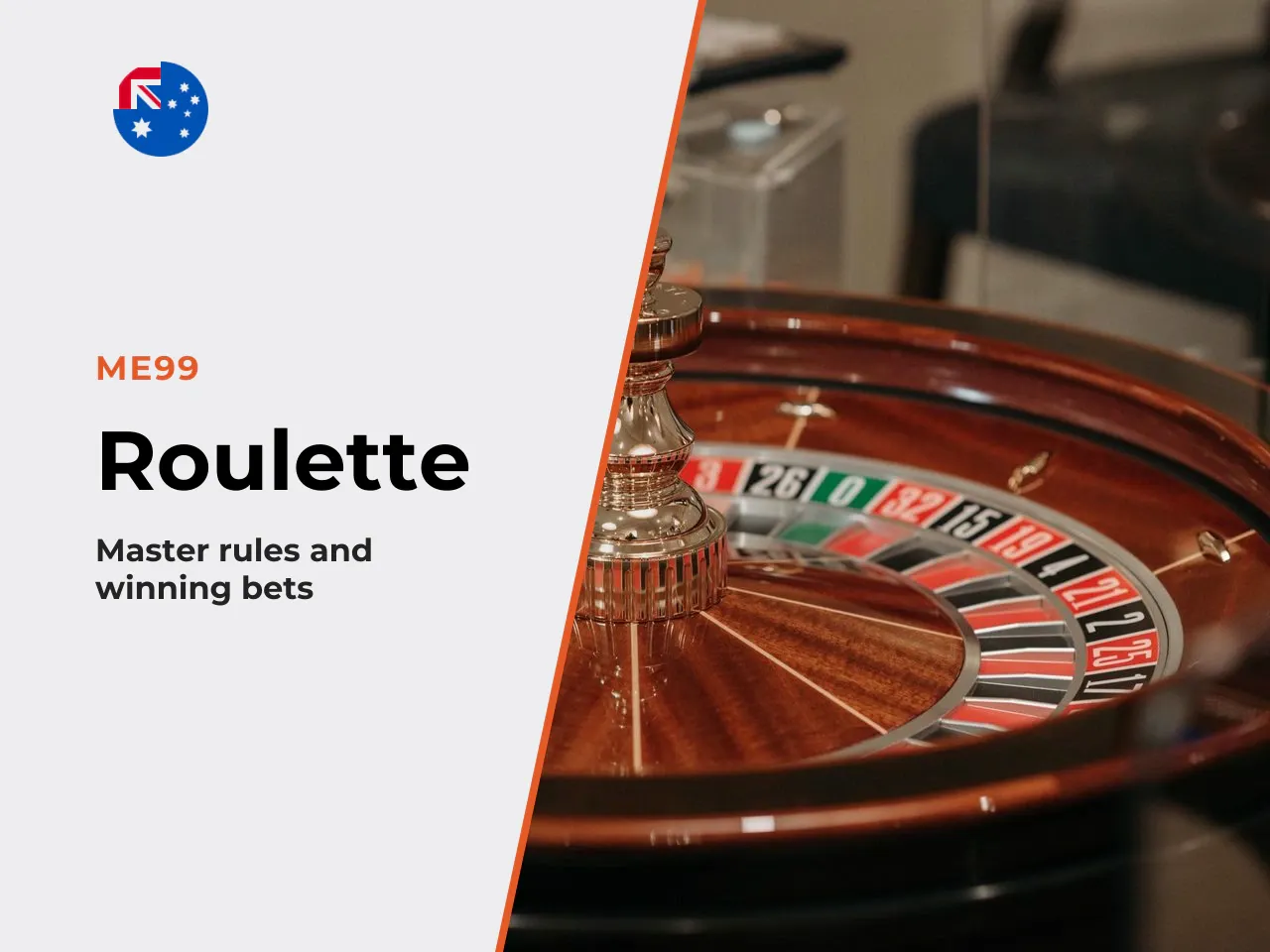
Roulette table, wheel, ball and playing chips
The physical and digital components of roulette come down to four core elements: the betting layout on the table, the revolving roulette wheel, the tracking ball, and the wagering chips. The layout maps every number from 0 (plus 00 in American variants) alongside the boxes used for group wagers.
The wheel holds alternately coloured red and black pockets, with green reserved for zero sectors. As it spins, a small ivory or ceramic ball is launched along the outer track. Physical laws, or certified pseudo-random algorithms in software versions, cause the ball to lose momentum and drop into a single pocket. Chips act as the standardised betting currency, letting the system track stake values instantly across individual and grouped areas.

Inside and outside bets: where you can place chips
Bets fall into two broad families, inside bets and outside bets, separated by their position on the grid and their risk-return profile. Inside bets sit directly on specific numbers or line intersections inside the main grid. Higher payouts, lower probability.
- Straight Up:one number, pays 35:1.
- Split:two adjacent numbers, chip on the dividing line, pays 17:1.
- Street:a row of three consecutive numbers, pays 11:1.
- Corner:four numbers meeting at one corner, pays 8:1.
- Six-Line:two adjacent rows of three numbers, pays 5:1.
Outside bets sit in the outer boxes around the grid. They cover large blocks of numbers, so they hit more often and pay less.

- Red or Black:the winning colour, pays 1:1.
- Even or Odd:parity, pays 1:1.
- High or Low:numbers 1 to 18 (Low) or 19 to 36 (High), pays 1:1.
- Dozens:first (1 to 12), second (13 to 24) or third (25 to 36) block, pays 2:1.
- Columns:one of three vertical columns of 12 numbers, pays 2:1.
French-style tables add announced (call) bets, which are placed against the wheel sequence rather than the numeric grid: Voisins du Zéro (the neighbours of zero), Tiers du Cylindre (a third of the cylinder), Orphelins (the orphan numbers left outside the other two sections) and neighbour bets such as "5 and the neighbours". These are convenience groupings of ordinary inside bets. They change the shape of your coverage, never the house edge.
European, American and French roulette: variant differences
The differences between European, American and French roulette games come down to wheel construction, the presence of one zero or two, and table rules that shift the overall house advantage. Choosing the right variant is the single most effective decision a player makes, and it costs nothing.
Enforcement data from the regulator shows how central these games are to the offshore market Australians run into:
«Most illegal services blocked in the reporting period offered casino-style games including blackjack, roulette, poker and slots.» Australian Communications and Media Authority, Action on interactive gambling: October to December 2024. https://www.acma.gov.au
All variants share the core betting mechanics. But the extra zero pocket in american roulette nearly doubles the house advantage compared with european roulette. French roulette goes further in the player's favour by returning part of the stake on even-money bets when zero lands.
Table 1: Structural and mathematical comparison of the primary roulette variants
| Parameter | European roulette | American roulette | French roulette |
|---|---|---|---|
| Total wheel pockets | 37 (0, 1 to 36) | 38 (0, 00, 1 to 36) | 37 (0, 1 to 36) |
| Zero sectors | Single green zero (0) | Single zero (0) and double zero (00) | Single green zero (0) |
| Base house edge (Straight Up) | 2.70% | 5.26% | 2.70% |
| Even-money house edge | 2.70% | 5.26% | 1.35% with La Partage or En Prison |
| Special rules | None standard | Five-Number Bet available, 7.89% edge | La Partage or En Prison on even-money bets |
| Call / announced bets | Voisins, Tiers, Orphelins (varies) | Rarely available | Standard, French racetrack layout |
European roulette and French roulette
European roulette uses a single-zero wheel of 37 pockets: numbers 1 to 36 plus one 0. That layout produces a fixed house advantage of 2.70% across standard bets. Because a Straight Up pays 35:1 while the true odds are 1 in 37, the missing unit is the operator's margin:
Expected value = (1/37 × 35) − (36/37 × 1) = −0.0270, or 2.70%.
«On the European wheel, 37 pockets paired with a 35:1 payout produce an expected loss of about 2.70% per unit staked.» Roulette Odds and House Edge Guide (2026). https://www.casinoedges.com
French roulette runs the same 37-pocket single-zero wheel, then adds friendlier rules for even-money outside bets (Red/Black, Odd/Even, High/Low). Under La Partage, if the ball lands on zero you lose only half of your even-money stake and the other half is returned. Under En Prison, the bet is held "in prison" for the next spin; win that spin and the original stake is released in full. Either rule halves the even-money house advantage to 1.35%, which makes French roulette the most favourable standard variant on the maths alone.
«La Partage lowers the effective house edge on even-money bets to roughly 1.35%, the best figure among standard roulette variants.» Roulette Odds and House Edge Guide (2026). https://www.casinoedges.com
One caveat worth checking in the table info panel: if a table labelled "French roulette" does not implement La Partage or En Prison, its even-money edge reverts to the ordinary single-zero 2.70%. Labels are marketing; the info panel is the contract.
American roulette and the extra wheel sector
American roulette adds a second green sector, the double zero (00), lifting the pocket count to 38. Payouts stay the same as on single-zero games, still 35:1 for a Straight Up win, while the winning probability drops from 1 in 37 to 1 in 38.
That small physical change rewrites the expected return. The house advantage rises to 5.26% across standard wagers:
Expected value = (1/38 × 35) − (37/38 × 1) = −0.0526, or 5.26%.
«In American roulette, 38 pockets with the same 35:1 payouts push the house edge to 5.26%, nearly double the European figure.» Roulette Odds and House Edge Guide (2026). https://www.casinoedges.com
American tables also carry the "Five-Number Bet" covering 0, 00, 1, 2 and 3. It pays 6:1 and holds a house edge of 7.89%, which makes it one of the poorest wagers available on any casino layout. Avoid it, even out of curiosity.

Innovative formats: Turbo, Multi-Wheel, Mini, 100-1 and Multi-Ball roulette
Beyond the classic trio, studios ship modified formats that change pacing, coverage or wheel size. The mechanics feel familiar. The mathematics is not always friendlier.
- Speed, Turbo and Lightning roulette:a standard round takes 45 to 90 seconds once betting time, the spin and the ball's travel are counted. Turbo formats compress that to roughly 25 to 40 seconds by speeding up or removing the ball animation. Faster rounds apply the same 2.70% edge to far more turnover per hour, and that is the most underrated risk in these titles.
- Multi-Wheel roulette:one bet is copied across several independently spinning wheels. Live automated versions usually run 8 to 12 wheels; RNG versions go much further, with some lobbies offering up to 100 at once. Your stake multiplies by the number of active wheels, so a "small" bet scales quickly.
- Mini roulette:a compact 13-pocket wheel, 0 plus numbers 1 to 12. Straight-up wins typically pay 11:1, and half of even-money stakes is returned when zero lands. Even with that concession, the house edge sits near 7.7%, well worse than European roulette.
- 100-1 roulette:a 105-sector wheel with 100 numbers and five differently shaped zero sectors. A straight-up number pays 100:1, and the edge on single numbers is 3.81%, better than American, worse than European.
- Multi-Ball roulette:up to 10 balls are released onto the same track. No two balls can settle in the same pocket, so hit frequency rises, but payouts are cut proportionally and each ball carries its own stake multiplier.
- Side bets:live providers keep bolting extras onto the base game, including Lucky Ball style multipliers, hot and cold number wagers and neighbour groupings. Side bets almost always carry a higher edge than the core inside and outside bets. Treat them as entertainment cost, not value.
Table 3: Modified roulette formats, structure and house edge
| Format | Wheel structure | Top payout | House edge | Best suited to |
|---|---|---|---|---|
| Turbo / Speed | 37 pockets, single zero | 35:1 | 2.70% per spin | Players who dislike waiting, though turnover per hour rises sharply |
| Multi-Wheel (8 to 100) | 37 pockets per wheel | 35:1 per wheel | 2.70% per wheel | Coverage-focused sessions with larger total stakes |
| Mini roulette | 13 pockets (0, 1 to 12) | 11:1 | ~7.7% | Simplified learning only, poor value |
| 100-1 roulette | 105 sectors (100 numbers, 5 zeros) | 100:1 | 3.81% on single numbers | High-variance long-shot play |
| Multi-Ball | 37 pockets, up to 10 balls | Reduced per ball | Provider-specific, 2.70% or higher | Higher hit frequency with adjusted payouts |

Live dealer roulette and RNG games: which to choose
Choosing between roulette live dealer streams and RNG software comes down to one question: do you want atmosphere, or control over spin speed? In a roulette live casino setting, video feeds show physical wheels handled by human croupiers. Software games use certified algorithms and settle instantly.
RNG software roulette
- Speed:instant settlement, and 100 or more spins per hour is easily reached
- Demo mode:free play, generally unlimited
- Outcome engine:certified pseudo-random number generator
- Control:full control of pauses, autoplay and stop-loss thresholds
- Minimum stakes:typically lower, around $0.10 to $1
Live dealer roulette
- Speed:dealer-paced, roughly one spin every 30 to 60 seconds
- Demo mode:view-only at best, a real-money balance is required
- Outcome engine:physical wheel and ball with OCR sensors
- Atmosphere:HD stream, dealer chat, shared table statistics
- Dependency:a stable connection, since lag cuts into betting windows

Figure 2: Architectural differences between live studio and RNG roulette formats (alt-text: side-by-side comparison of live dealer and RNG roulette).
Both formats face game-fairness testing obligations in licensed jurisdictions, where licence conditions require RNG certification and, for live studios, audited wheel and OCR procedures. Verifying that a specific operator's software is certified remains the player's job. Look for named testing laboratories in the site footer and check the provider list against known studios rather than assuming compliance. Operational pacing and access conditions also differ noticeably between iGaming platform formats, and that difference affects bankroll control more than most players expect.
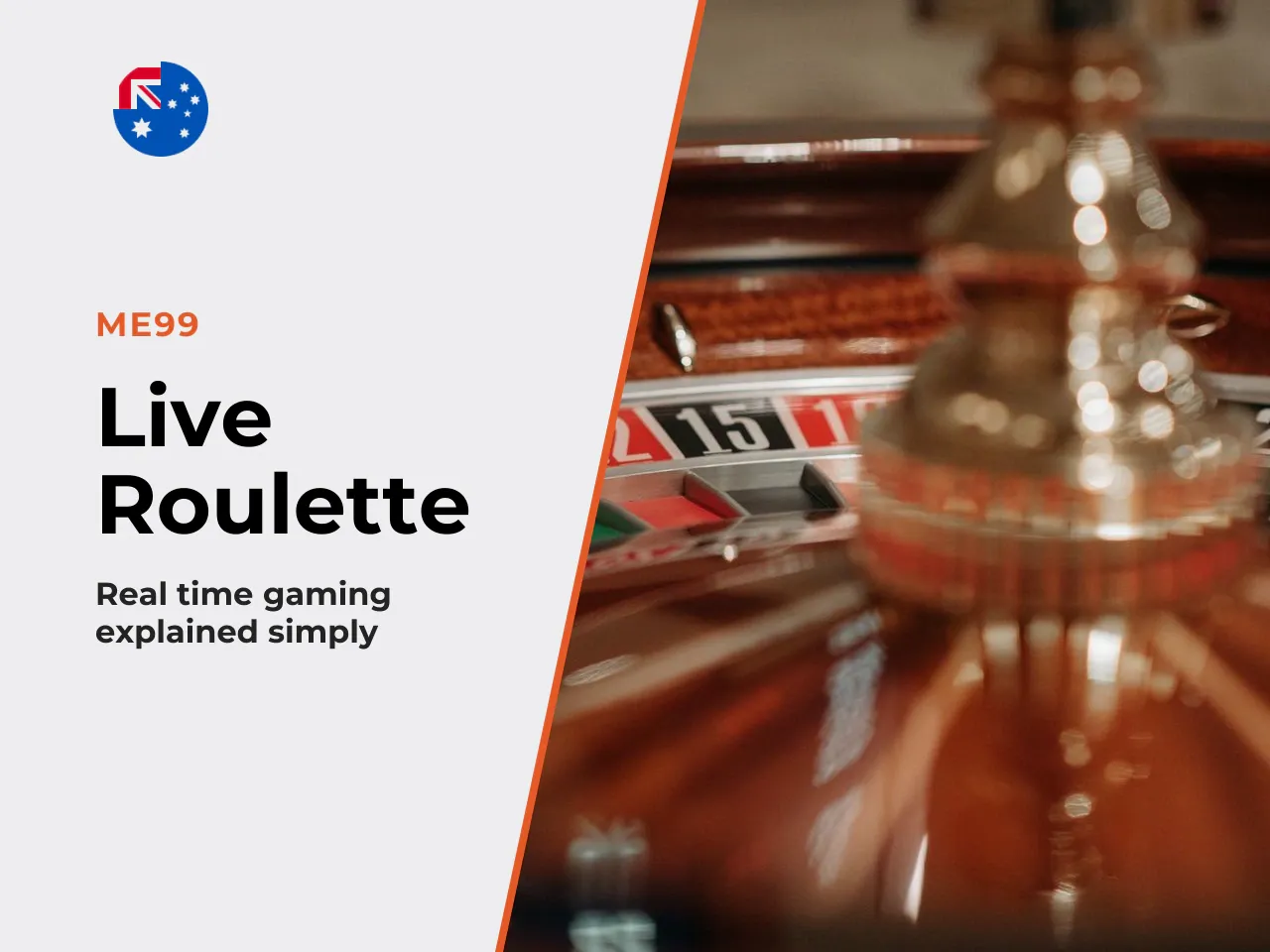
How a roulette live casino session works
A live roulette session is broadcast from a dedicated studio using high-definition cameras trained on the table layout and the physical wheel. A professional dealer sets the pace, announces the betting windows, and spins wheel and ball by hand.
Key operational features include:
- Timed betting windows:you get a fixed window, usually 15 to 30 seconds, to place digital chips on the virtual overlay before the croupier closes wagers.
- Optical Character Recognition (OCR):sensors on the physical wheel capture the exact winning pocket and translate the result into digital settlement immediately.
- Social interaction:live chat lets you speak to the dealer and view aggregated table bets in real time.
- Real-money requirement:live streams carry staffing and broadcasting overheads, so these tables rarely offer demo play and require a funded balance.
Players pick live tables for the atmosphere, and the pace is naturally limited by human handling and broadcast schedules. That immersion does carry a documented behavioural cost:
«Live roulette is more strongly associated with harm markers, including declined deposits, bonus seeking and play at unusual hours, than software RNG versions.» Delfabbro et al., Behavioural markers of harm and their potential in identifying product risk in online gambling (2023 to 2025). https://www.agrc.org.au

RNG roulette games and online spin speed
Software-based roulette online games run on a Random Number Generator, a mathematical algorithm that outputs random numerical sequences mapped to specific wheel pockets. In an RNG roulette game, the outcome is calculated the instant you press spin.
Key features include:
- Uncapped spin velocity:rounds resolve in milliseconds, so you can complete far more spins per minute than at a live table. That cuts both ways.
- Autoplay and custom pacing:you can configure automated spin sequences, set loss and win thresholds, or pause indefinitely with no timed pressure.
- Demo availability:because RNG titles cost little in server infrastructure per session, almost all of them offer roulette demo and free roulette modes for zero-risk practice.

Historical note and the law of large numbers: the prototype wheel appeared in 18th-century France, with the popular account crediting mathematician Blaise Pascal, who produced a randomness device while chasing perpetual motion. In the 1840s, brothers François and Louis Blanc stripped the double zero from the 38-pocket wheel and built a casino around the single-zero design, which created the European layout still used today. That layout is now testable at absurd scale: across public datasets exceeding one billion logged spins on certified RNG platforms, all 37 European pockets have landed within a fraction of a percentage point of the theoretical 2.703% rate, with red and black each near 48.65% and green near 2.70%. Over one hundred spins a single number can hit eight times and feel "due". Over ten thousand it crawls back to 2.703% and stays there. Short samples produce noise, long samples produce the house edge, which is precisely why no pattern-reading approach turns into an advantage.
Odds, payouts and choosing a bet in roulette
Understanding odds, payouts and mathematical expectation lets you pick bet types that match your risk tolerance rather than your mood. The house edge, or house advantage, guarantees that across a statistically large sample of spins the casino retains a fixed slice of total betting volume.
Individual spins are independent random events. Payout tables are simply structured so that payouts sit slightly below the true odds of winning.
Table 2: Odds, payouts and expected returns, European vs American roulette
| Bet type | Covered numbers | Payout ratio | European odds (37 pockets) | American odds (38 pockets) | European house edge | American house edge |
|---|---|---|---|---|---|---|
| Straight Up | 1 | 35:1 | 2.70% (1 in 37) | 2.63% (1 in 38) | 2.70% | 5.26% |
| Split | 2 | 17:1 | 5.41% (2 in 37) | 5.26% (2 in 38) | 2.70% | 5.26% |
| Street | 3 | 11:1 | 8.11% (3 in 37) | 7.89% (3 in 38) | 2.70% | 5.26% |
| Corner | 4 | 8:1 | 10.81% (4 in 37) | 10.53% (4 in 38) | 2.70% | 5.26% |
| Six-Line | 6 | 5:1 | 16.22% (6 in 37) | 15.79% (6 in 38) | 2.70% | 5.26% |
| Column / Dozen | 12 | 2:1 | 32.43% (12 in 37) | 31.58% (12 in 38) | 2.70% | 5.26% |
| Red / Black | 18 | 1:1 | 48.65% (18 in 37) | 47.37% (18 in 38) | 2.70% | 5.26% |
| Even / Odd | 18 | 1:1 | 48.65% (18 in 37) | 47.37% (18 in 38) | 2.70% | 5.26% |
| Five-Number Bet | 5 (0, 00, 1, 2, 3) | 6:1 | Not available | 13.16% (5 in 38) | Not available | 7.89% |
As Table 2 shows, whether you back red, black or a single number, the house edge stays uniform across standard wagers within one variant. Outside bets reduce volatility and deliver more frequent smaller wins; inside bets increase bankroll variance and stretch the gaps between them. Coverage and payout always move in opposite directions. A single number pays 35:1 but lands roughly once in 37 spins, while red covers 18 pockets for 1:1. Neither is mathematically smarter. They just feel completely different across an hour of play.
Roulette strategy: how to approach the game without guaranteed-win myths
A roulette strategy can help you structure stake sizes and manage session volatility. What it cannot do is overcome the fixed house edge. Popular progressive betting systems such as Martingale, Fibonacci and D'Alembert redistribute short-term outcomes while leaving long-term expected value negative.
Controlled testing across 10,000 European spins quantifies how differently these systems behave, and how identically they fail:
«Flat betting returned −2.24% ROI with a 257-unit maximum drawdown; Martingale finished at −12.51% ROI with a 3,690-unit drawdown.» Tabone S., Martingale vs Paroli: 10,000-spin European roulette test (2023). https://www.casinoedges.com

Flat betting produced a predictable, fairly smooth decline that tracked the theoretical −2.70% expectation. Progressive doubling showed severe maximum drawdowns and, on the inevitable extended losing runs, complete bankroll depletion.
Fact check: mathematical fallacies in roulette betting systems
Claim: "Progressive betting strategies like Martingale guarantee a long-term profit by doubling bets after every loss."
Verification status: FALSE.
Mathematical evidence: every spin is an independent event, and the wheel has no memory. In European roulette, the win probability on Red stays 18/37 (48.65%) whether Black has landed 5, 10 or 20 times in a row. Progressive doubling fails against two hard boundaries: finite player bankrolls and mandatory table limits set by the operator. A losing run of n spins requires 2ⁿ−1 units to chase. When the streak outlasts your bankroll or hits the table cap, the accumulated loss simply stays lost.
«Monte Carlo simulations confirm that all betting systems converge, given enough spins, on the same expected loss defined by the house edge.» CasinoEdges Betting Systems Lab, Monte Carlo Roulette Simulator. https://www.casinoedges.com

Positive progressions and cover systems: Paroli, Labouchere and James Bond
Alongside the negative progressions, players use positive and combinatorial systems. All are testable in demo or auto-spin mode, and all leave expectation untouched.
- Paroli (anti-Martingale):the stake doubles only after a win. The aim is to catch three consecutive wins, then reset to the base unit, which caps exposure during losing sequences. Drawdowns are far shallower than Martingale, and so are the recoveries.
- Labouchere (cancellation system):you write a sequence, say 1-2-3-4. Each stake equals the sum of the first and last numbers. A win cancels both; a loss appends the lost amount to the end. The list can grow faster than the bankroll, so the failure mode here is arithmetic, not luck.
- James Bond (flat coverage):a fixed combined bet of $200 per spin, with $140 on High (19 to 36), $50 on the 13 to 18 six-line and $10 on zero. It covers 25 of 37 pockets, about 67.5% of the wheel, so wins arrive often. The 12 uncovered numbers cost the full $200 when they land, and expected loss remains 2.70% of turnover.

⚠️ Responsible gambling and risk awareness
Playing roulette real money games carries real financial risk. Gambling is not an investment, an income source or a way out of financial trouble. Set strict deposit, loss and session time limits before you start. If you want to explore staking systems, test them only in roulette demo or free roulette modes. If gambling stops feeling recreational, use self-exclusion registers such as BetStop, or contact Gambling Help Online on 1800 858 858.
Disclaimer: strategy information here is educational. No betting system guarantees a profit. If you notice signs of problem gambling, contact Gambling Help Online on 1800 858 858.
Payment methods and withdrawal rules for Australian players
Funding and cashing out is where most offshore roulette sessions actually go wrong. Treat banking as a pre-deposit checklist, not an afterthought. Payment rails differ in speed, fees, minimums and verification demands, and the method that made depositing easy is frequently not available for withdrawals.
Table 4: Common payment rails for Australian online roulette players
| Method | Deposit speed | Withdrawal availability | Typical processing | Notes |
|---|---|---|---|---|
| PayID / instant bank transfer | Near-instant | Often yes | 0 to 48 hours after approval | Direct from Australian banks, usually fee-free; banks scrutinise gambling transfers |
| Cryptocurrency (BTC, ETH, USDT) | Minutes, after confirmations | Yes | 15 minutes to 2 hours | Highest cashout caps, with monthly limits at some brands reaching $50,000 or more; network fees and price volatility apply |
| Visa / Mastercard | Instant | Limited | 3 to 5 banking days | Issuer declines are common on gambling merchant codes |
| Prepaid vouchers (Neosurf, CashToCode) | Instant | No | Not applicable, an alternate payout method is needed | Deposits without exposing bank details; nominate a withdrawal rail before you win |
| E-wallets | Instant | Usually yes | 0 to 24 hours | Availability for Australian accounts varies by brand |
Points to verify in the cashier terms before your first deposit:
- Withdrawal caps. Offshore brands commonly publish per-transaction, weekly or monthly ceilings, often between roughly $4,000 and $50,000 per period. A large roulette win paid out in weekly slices is a terms issue, not a dispute.
- Payout windows. Stated processing runs from "instant" to "up to 72 hours" or "3 to 5 banking days". The clock usually starts after KYC approval, not when you press withdraw.
- KYC documentation. Have ID, proof of address and proof of payment ownership ready before depositing. Verification requested for the first time at withdrawal is the single most common cause of delay.
- Currency and fees. Confirm AUD support. Forced conversion can quietly cost 2% to 3% per transaction, each way.
- Bonus interaction. Roulette often contributes 10% or 0% towards wagering requirements, and many terms cap the maximum bet while a bonus is active. Read the game-contribution table before accepting any offer.
Expert tip: complete verification and make a small test withdrawal early. A confirmed payout rail is worth more than any headline match bonus.
How to choose a roulette casino and start playing
Moving to an online roulette platform means assessing operator transparency, licensing status and game variety before you register. A structured review keeps you on a secure online casino for roulette play with fair software conditions and banking rules you can read in plain English.
For Australian audiences, the approach that works is terms-first: check licensing details, payment speeds and responsible gambling controls, then look at bonuses. The same evidence base applies to the warning messages you will see on those sites:
«Players prefer self-appraisal messages that prompt reflection on losses over generic slogans, which are less effective at changing behaviour.» Rapid Evidence Assessment of Responsible Gambling Messages (2025). https://www.agrc.org.au
📋 Quick pre-play check: are you ready for real-money roulette?
- Have you verified the licence (for example Curaçao, Anjouan, Tobique, MGA) and the licensee name?
- Does the cashier support a method that works for you both ways: PayID, crypto or cards?
- Have you read the daily, weekly and monthly withdrawal caps and the payout windows?
- Have you tested the betting interface in demo mode and set a session budget?
All four ticked? The platform is ready for a controlled session. Any box left unticked is a reason to pause, not to deposit.

What to check before choosing a roulette game
When you assess an online casino for a roulette game, work through these compliance and operational criteria:
- Licensing and regulatory compliance. Check whether the operator displays legitimate licensing credentials from recognised jurisdictions and respects local interactive gambling restrictions. Australian regulators do not extend the same dispute protections to offshore licensees.
- Game variant availability. Make sure the lobby offers european roulette or French variants instead of pushing you towards double-zero American tables.
- Withdrawal rules and limits. Read minimum payout thresholds, daily and monthly cashout caps, and KYC requirements before depositing, not after.
- Live and RNG balance. Confirm the site carries both certified RNG titles for solo play and high-definition roulette live casino streams from audited providers.
- Responsible gambling tools. Check that the player dashboard has working deposit limits, cooling-off periods and immediate self-exclusion.
- Security and mobile performance. Look for SSL encryption, a clean breach history and a stable mobile layout. Racetrack betting panels in particular tend to break on small screens.
Red flags worth walking away from: no named licensee or company registration; roulette tables from unknown, unlisted "providers"; payout terms that cap winnings from a single spin; a demo mode producing implausible win rates compared with the paid version; support staff who cannot name the RNG testing laboratory; and bonus terms that allow retroactive confiscation of winnings. Any one of those is enough. Two is a pattern.
When it is better to start with a roulette demo
Beginning with a roulette demo is the sensible move whenever you meet a new variant, a new software provider or an unfamiliar betting layout. Demo sessions let you check interface responsiveness, test chip placement speed, and watch how advanced rules such as La Partage or announced call bets actually resolve, all without risking capital.
Once you have confirmed the mechanics, understood the payouts and set a session budget in free-play mode, you are in a position to decide whether real-money play suits you. That caution is justified by product-level data:
«Roulette participation correlates positively with higher PGSI scores, indicating elevated problem-gambling risk among players of this product.» Online Problem Gaming Behaviour Index (2023 to 2025). https://www.agrc.org.au
FAQ: common questions about roulette online
French roulette played under La Partage, where the house edge on even-money bets falls to 1.35%. European roulette at 2.70% is the next best option. American roulette at 5.26% is worth skipping whenever a single-zero table is open.
The Interactive Gambling Act 2001 prohibits operators from offering real-money casino games, roulette included, to people physically located in Australia. The prohibition targets service providers rather than individual players, and free-play games with no cash payouts fall outside the ban. If you play at offshore sites, you sit outside Australian consumer protection, so disputes are handled under the operator's own licensing jurisdiction.
No. Table limits and a finite bankroll cap how far a doubling progression can run, and a losing streak of n spins requires 2ⁿ−1 units to chase. Across 10,000 tested spins, Martingale finished at −12.51% ROI against flat betting's −2.24%.
In licensed environments, outcomes come from certified random number generators or from a physical wheel captured by OCR. Across public datasets exceeding one billion spins, every European pocket has landed within a fraction of a percentage point of 2.703%. The operator's advantage comes from payouts sitting one unit short of true odds, not from manipulated spins.
Processing typically runs from near-instant with crypto to 3 to 5 banking days with cards, starting after KYC approval and subject to published caps. Recreational gambling winnings are generally not treated as assessable income in Australia; if gambling forms part of a business-like activity, seek professional tax advice.
It depends on the operator. Many RNG titles launch in fun mode with no registration, while others require a registered but unfunded account so the session can be tracked. Live dealer tables generally do not offer demo credits at all.
What to do next
- Open a French or European roulette table in demo mode and run 50 flat outside bets just to feel the pacing.
- Write down a session budget, a loss limit and a time limit, then set them as account limits rather than intentions.
- Compare licensing, withdrawal caps and payment rails before any deposit, using the four-point check above.
- If gambling stops being recreational, use BetStop or call Gambling Help Online on 1800 858 858.